
Life & Mission
“To the weak I became weak, so that I might gain the weak. I have become all things to all people that I might by all means save some.” (1 Corinthians 9:22)
Childhood
Costanzo Gioseffo Eusebio Beschi was the tenth child of fourteen, born on 08 November 1680 at Castiglione delle Stiviere in north Italy, son of the knight-lawyer Gaudioso Beschi and Elizabeth Nodari, a captain’s daughter. Baptized on 13 November, he was exposed to humanities and philosophy before entering the Novitiate at eighteen at Novellara, under Fr. Michael Angelo Tamburini, the future Superior General.
Jesuit Formation
During his formation (1698–1710) at Novellara, Ravenna and Bologna he gathered Jesuit spirituality, grammar, rhetoric, Latin, Greek and Hebrew, morality, politics, philosophy and theology, proving his apostolic zeal and tenacity for the Madurai Mission even before his ordination in 1709. He made his Tertianship in 1710 at Ambalakaadu in South India.
In the Mission Field
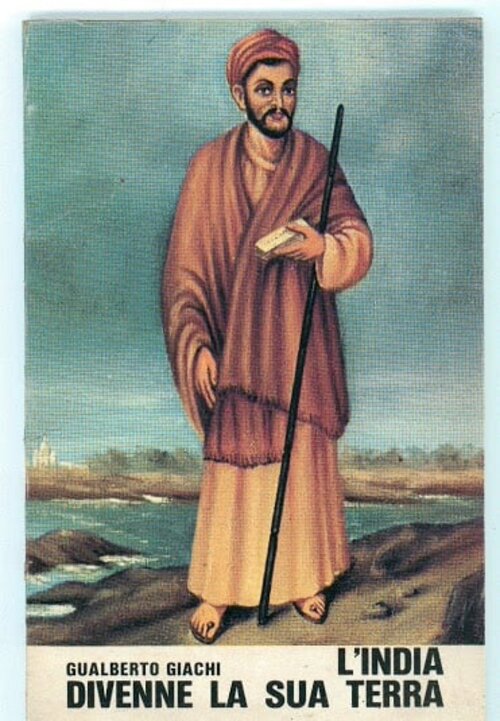
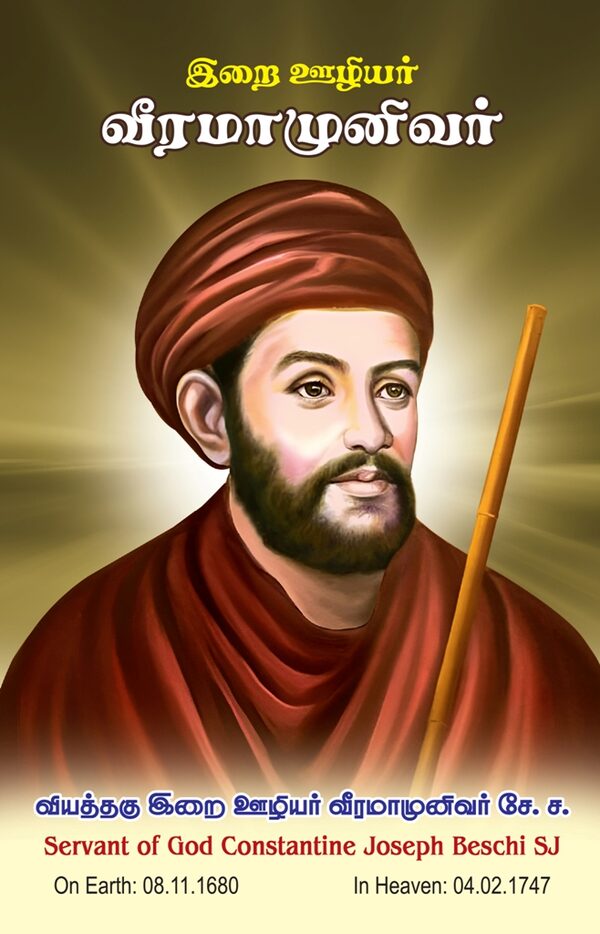
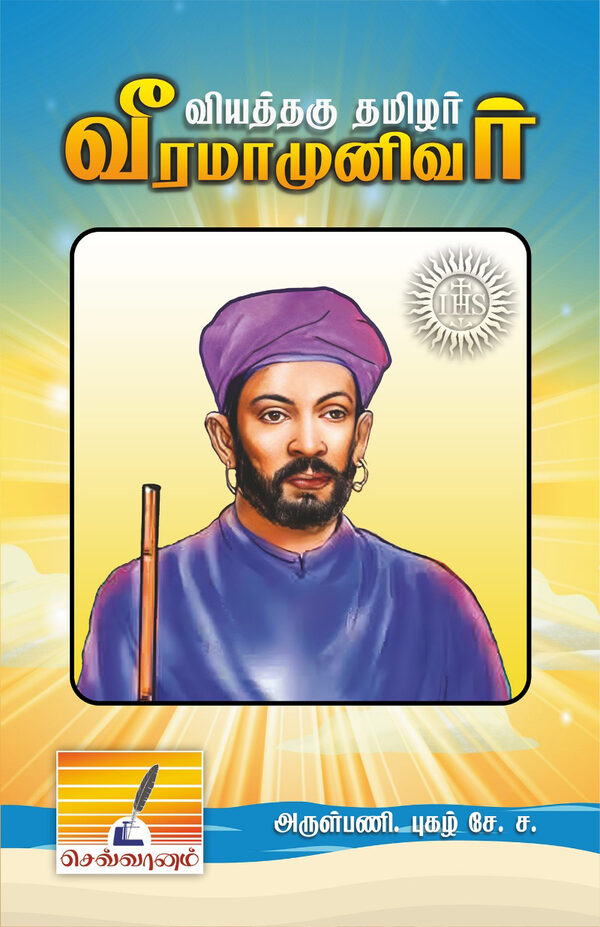
From his entry into the Madurai Mission he transformed himself into a Pandaarasaami under Fr. Louis Noel de Bourzes at Kaamanaayakkanpatty. With his Tamilized name — first Dhairiya Naathar (the Resilient Leader), then the polished Veeramaamunivar (the Valiant Sage) — he adopted a light yellow cassock and shawl, a red turban with a sandal-paste dot on the forehead, simple earrings, a staff and a sling bag of palm leaves.
God alone knows how happy I am in this country, where my constitution adapts itself easily to a mode of life so different from the one we follow in Europe… God grant that I may not be unworthy on account of my sins to live in it until my death!Letter to the Superior General, from Avur, 1711
As a young Father at Ayyampettai–Thennur he peaceably settled a dispute between two communities over the parish house. Transferred to Gurukkalpatty (1713–1715), he was arrested on 21 December 1714, tortured and sentenced to death on false charges — then saved when Hindus and Christians alike testified to his innocence and poverty.
I was thrown into irons, and judged worthy to suffer reproaches for the name of Jesus… with supreme joy of soul never experienced before, I was about to receive the palm of martyrdom.Letter to the Superior General, 12 January 1715
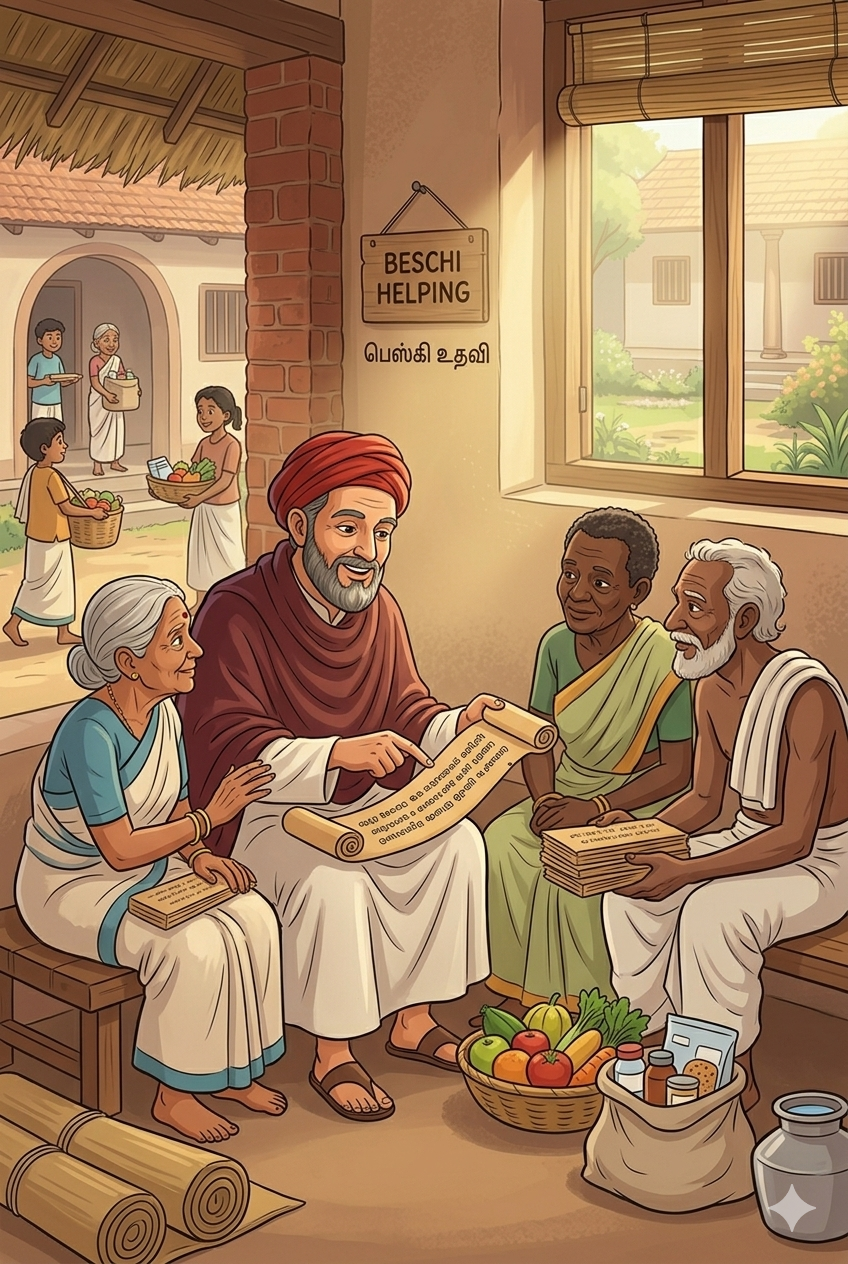
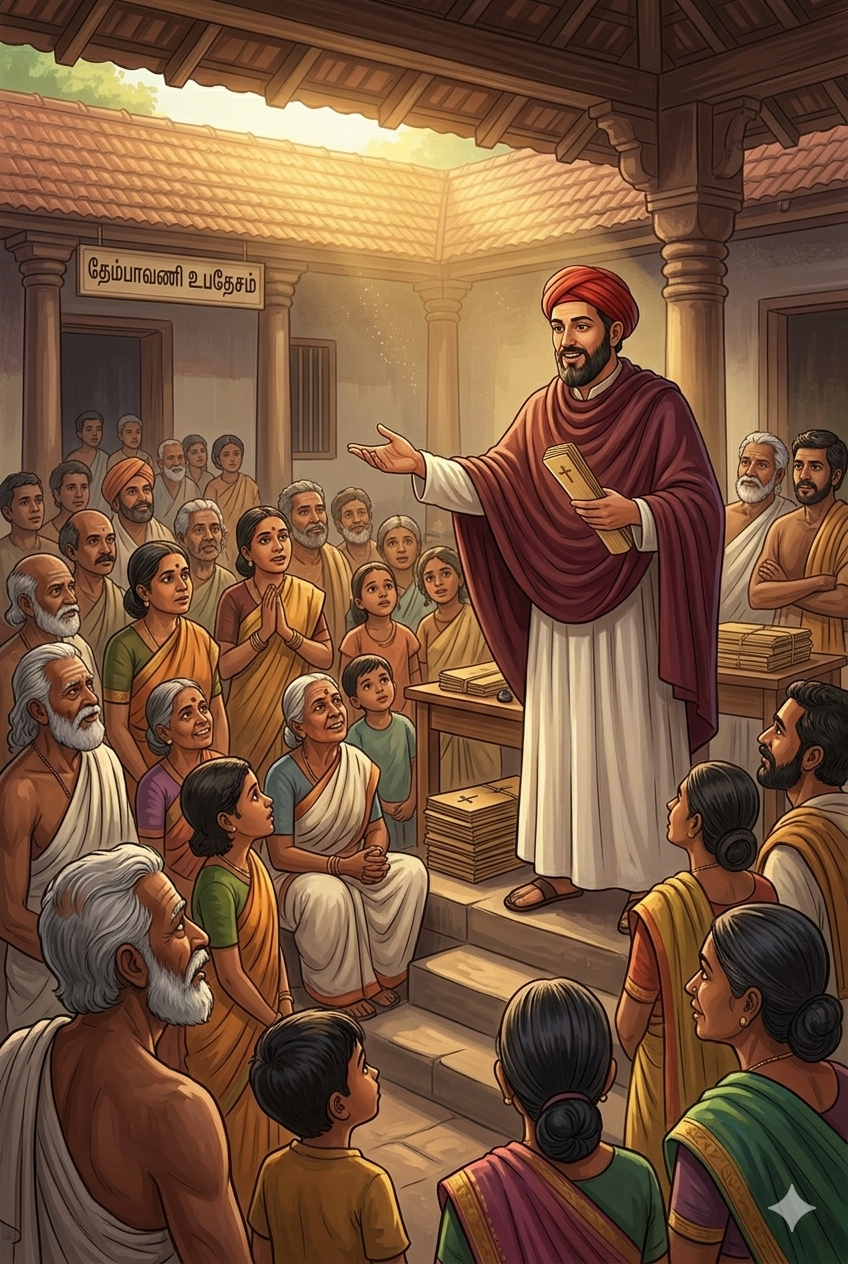
After a risky sojourn in the Marava country he was sent to Elakkurichi, where he served as Vicar Forane and parish priest for nearly eighteen years (1721–1739). There he built the Shrine of Our Lady of Refuge (Adaikala Maadhaa) and the shrine of Our Lady the Great at Konaankuppam, founded a school for catechists, and — with the friendship of the Moghul commander Chanda Sahib — secured land and protection for several churches. He comforted and healed the victims of persecution, flood, famine and epidemic.
“It is finished.”
In 1742 Beschi was transferred to Manapad near Tuticorin. In 1746 he went as a Visitor to the Ambalakad Seminary. There he taught the Scholastics Tamil and prepared them for the mission. He fell ill there suddenly and died on 04 February 1747, at the age of 66, the very memorial day of John de Britto.
After 37 years of laborious mission in Tamil Nadu as Pandarawamy, without even having returned to his country once, having baptized 7000 people with his own hands, Beschi surrendered his spirit to God, saying “It is finished.” And God the Father replied, “Well done, good and faithful servant; you have been faithful with a few things. I will put you in charge of many things.” After the Suppression of the Jesuits, in 1791, the College where he was buried was destroyed by Tippu Sultan.
Beschi faced the challenges of his time with indomitable courage and creativity. This noble intention of saving souls, without seeking any rest or reward, makes him an outstanding personality for us to follow. May his light shine and enlighten the lives of the poor and the marginalized, helping them to lead a life as per the Gospel values. Come, let us share in this light and be beacons which dispel darkness.
Faith, Hope & Charity
He heard the Lord with reverence and served the Madurai Mission until death, making hope spring amid famine, plague and persecution through the Mother of Refuge at Elakkurichi.
Prudence, Justice, Fortitude & Temperance
He reconciled feuding communities, negotiated freedom for persecuted Christians, pleaded for the catechists’ just salary, and faced an unjust death sentence with resolve.
The Evangelical Counsels
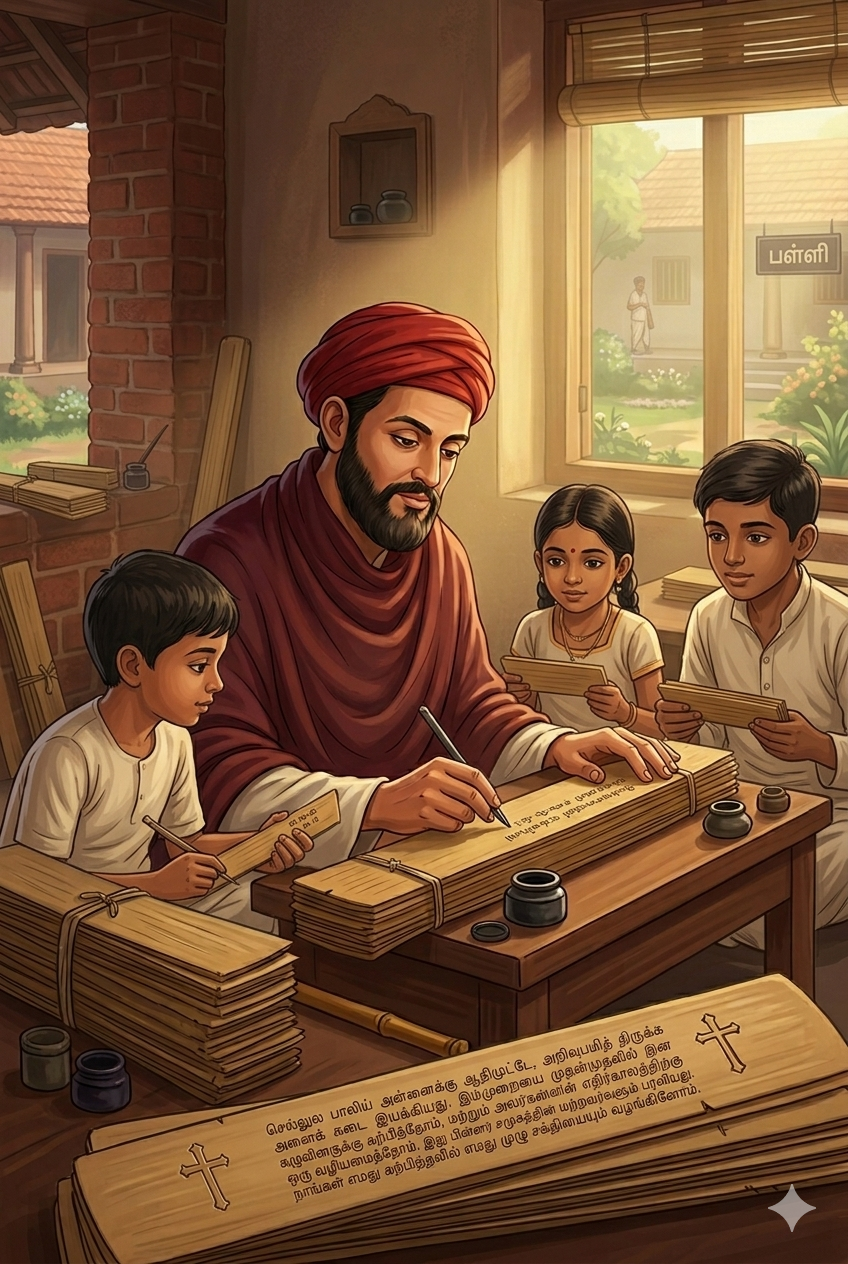
Living in poverty as a Pandaarasaami, writing on palm leaves, avoiding erotic themes common in his day, and submitting humbly to his superiors.
Salvation of Souls & Bodies
Beyond the sacraments he tended victims of disaster, healed with Siddha medicine, and reconciled the divided.
Apostolic Zeal & Creative Pastoral Care
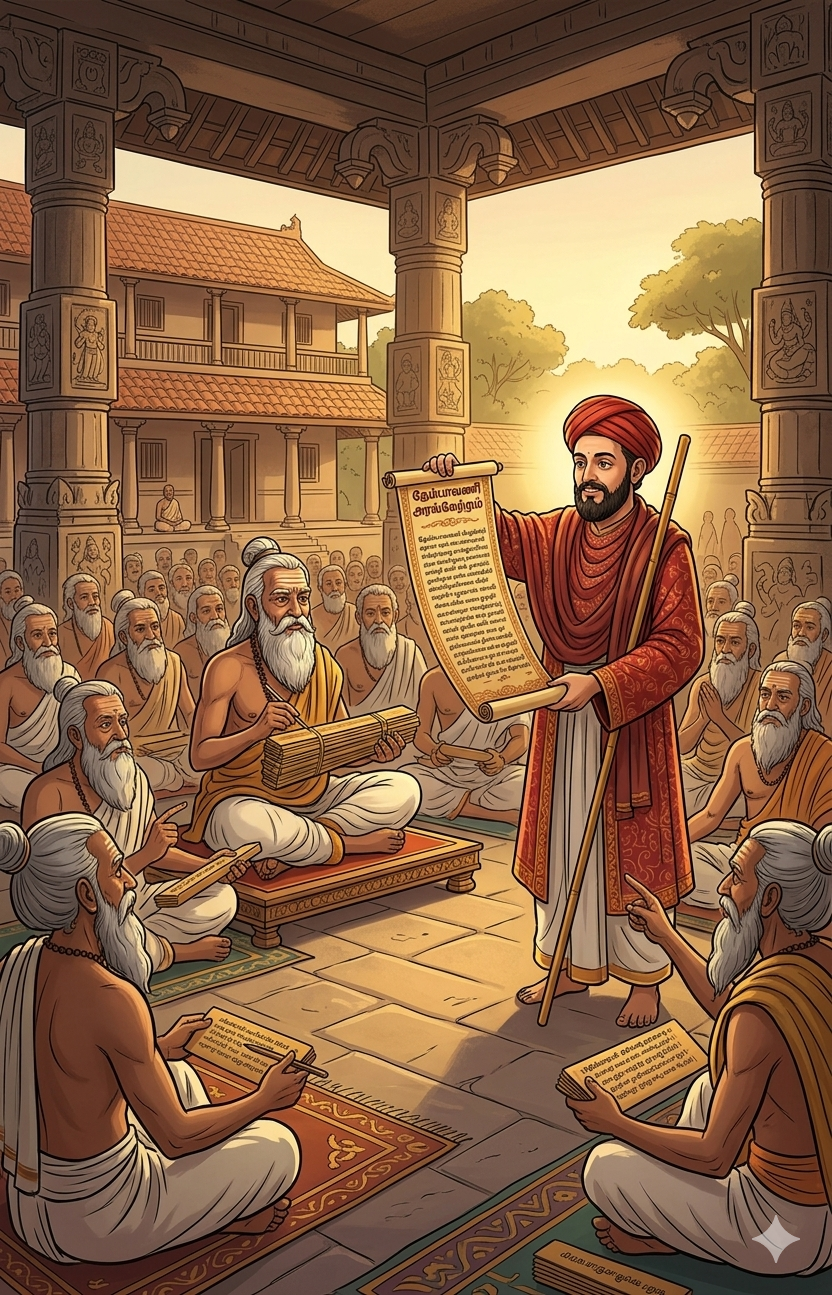
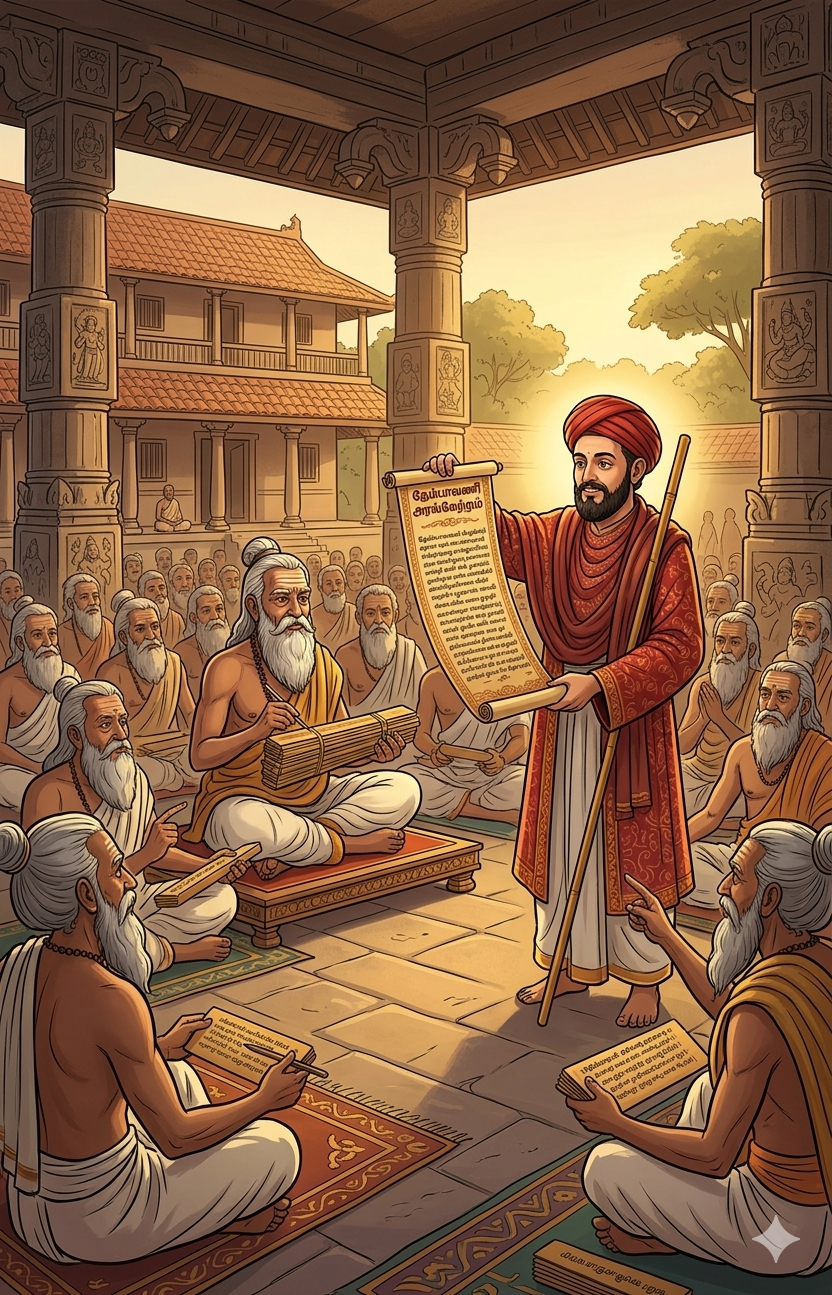
His literary genius served devotion to Christ, the Virgin Mother and the saints, and his method was imitated by catechists trained in his school.
Spirit of Catholicism & Inculturation
Leaving Italy for good, he was “replanted into the womb of the Tamil religio-cultural soil,” letting the Bible enter the South Indian imagination as never before.